Skip to content

Ulysses Neves

Microsoft Entra ID, authentication, and hybrid identity troubleshooting.

Menu
  • Início
  • Microsoft Azure
  • Microsoft AD FS
  • Microsoft 365
  • Contact
Menu

Hybrid Azure AD Join – Fixing error message error_missing_device

Posted on 3 de May de 2022

Hello everyone. In this article, I will show how to fix the error message error_missing_device when you try to have your domain-joined device as Hybrid Join with Azure AD as part of this deployment plan available in this Microsoft public document ‘Plan your hybrid Azure Active Directory join implementation‘.

Scenario:

Device OS: Windows 10
GOAL: Have the device achieve the status ‘Hybrid Azure AD Joined’
Issue: Automatic-Device-Join task in the Windows Task Scheduler ends with ‘Las Run Result’ (0x1):

Investigation: Checking the local event viewer log Microsoft-Windows-User Device Registration/Admin, we see the error message below:

The get join response operation callback failed with exit code: Unknown HResult Error code: 0x801c03f3.
Activity Id: 003e9f28-1bb6-4a22-8498-XXXXXXXX
The server returned HTTP status: 400
Server response was: {“code”:”invalid_request”,”subcode”:”error_missing_device“,”message”:”The device object by the given id (f4caef4d-c69b-44e5-b1ff-XXXXXXXX) is not found.“,”operation”:”DeviceRenew”,”requestid”:”003e9f28-1bb6-4a22-8498-XXXXXXXX”,”time”:”03-31-2022 18:07:22Z”}

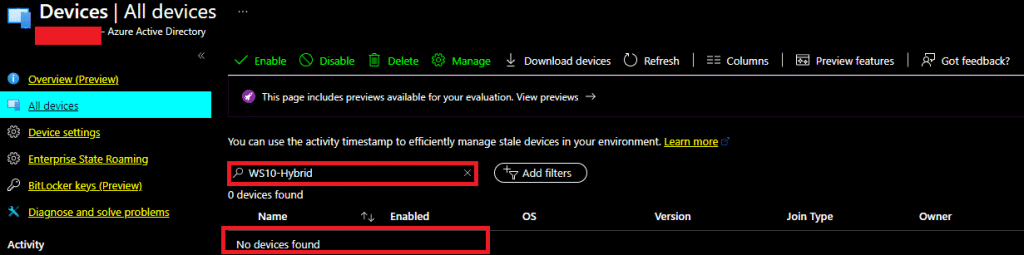
Checking Azure AD, we are not able to find the device under blade All devices:
Reason: As per Hybrid Azure AD Join prerequisites, if the computer objects of the devices you want to be hybrid Azure AD joined belong to specific organizational units (OUs), configure the correct OUs to sync in Azure AD Connect. To learn more about how to sync computer objects by using Azure AD Connect, see Organizational unit–based filtering. Reference: Prerequisites

Considering I am not able to see my device in Azure AD, as the next step, we will investigate why.

First, I will confirm which OU my device belongs to in the Active Directory:
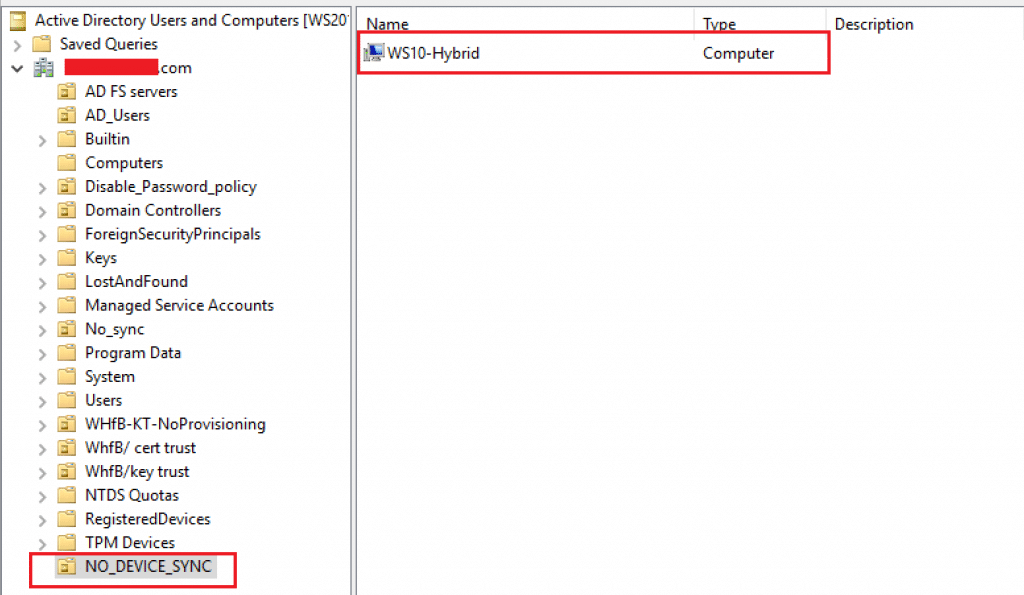
Then, I will check in the AAD Connect tool if the OU ‘NO_DEVICE_SYNC’ is in the SYNC scope. To achieve this, I will open the AAD Connect tool and select Customize synchronization options:
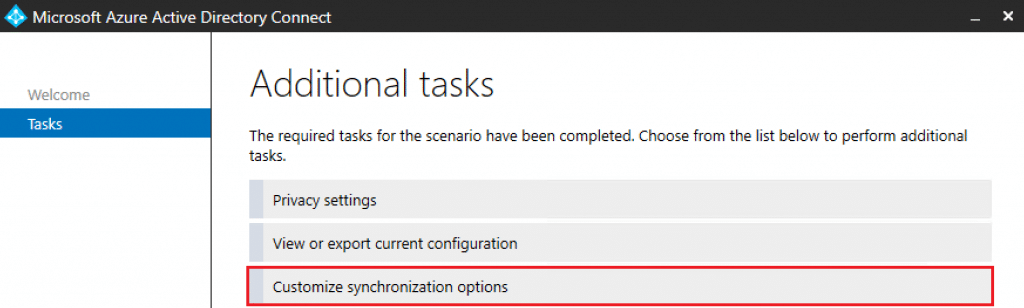
In the Domain/OU Filtering tab, I select my current domain and confirm the OU is NOT in the SYNC scope:
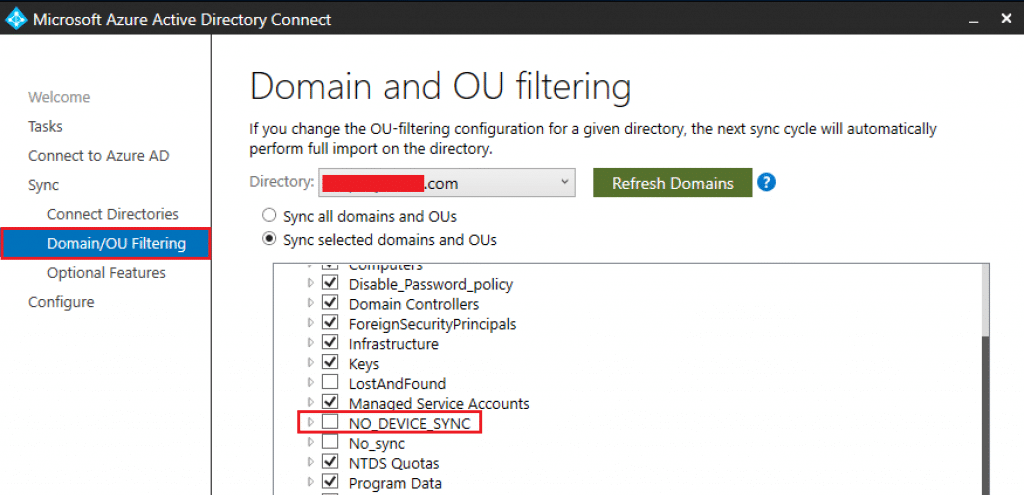
Fix: To fix this issue, I can either move my machine to another OU or include the missing OU in the SYNC scope.

To fix my issue, I will check my OU named NO_DEVICE_SYNC and click Next until I reach the AAD Connect page below. Make sure the option Start the synchronization process when configuration completes is selected, and click Configure.
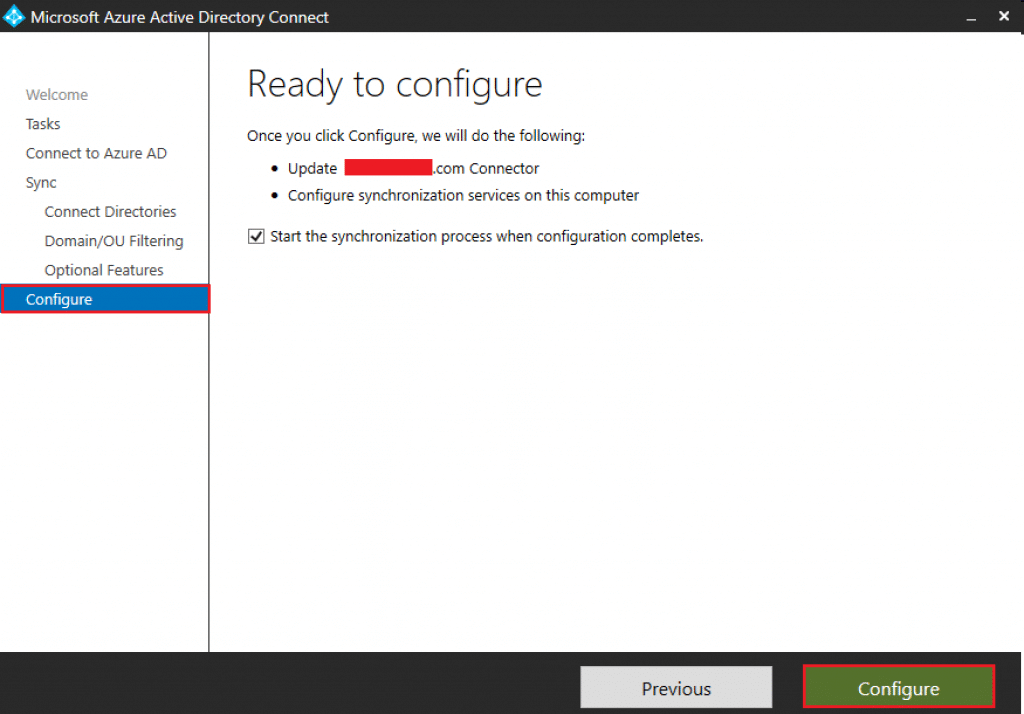
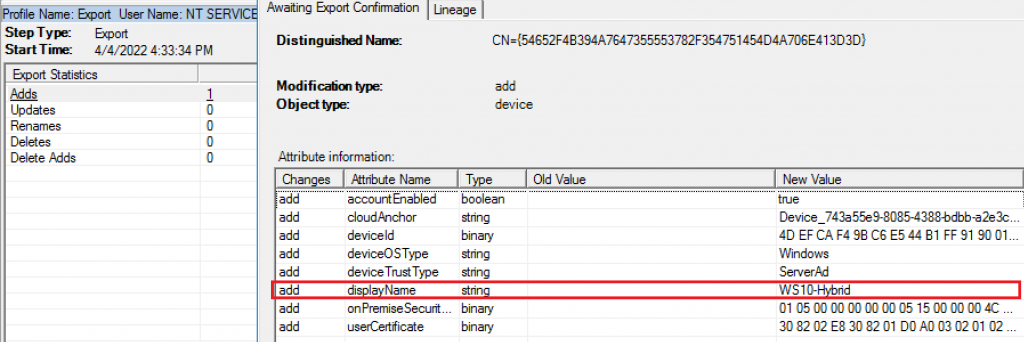
After the SYNC is finished, we can see my device named WS10-Hybrid added to Azure AD in the Synchronization Service Manager:
Now, searching for the same device in Azure AD, we can see it shows up with the status ‘Pending’:
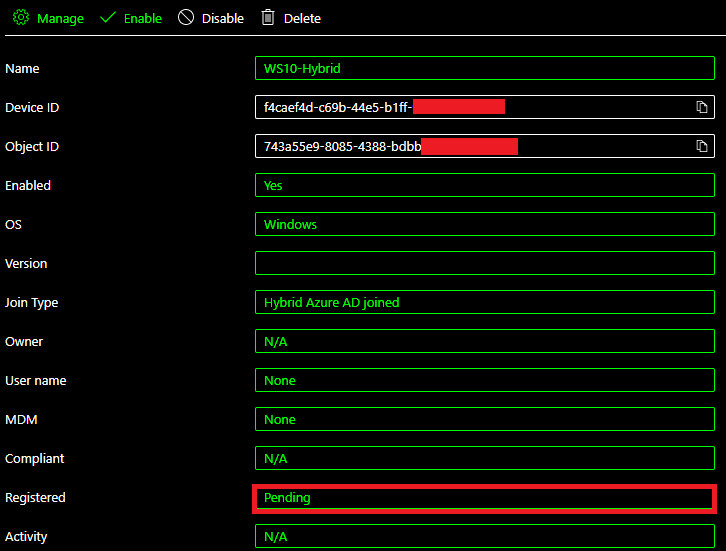
The status above is expected on the devices which have been SYNCED to Azure AD, but have not started yet the Automatic-Device-Join task:

Test: Now, with the device under SYNC scope and pending for Hybrid registration, we see a different output in the Automatic-Device-Join task:

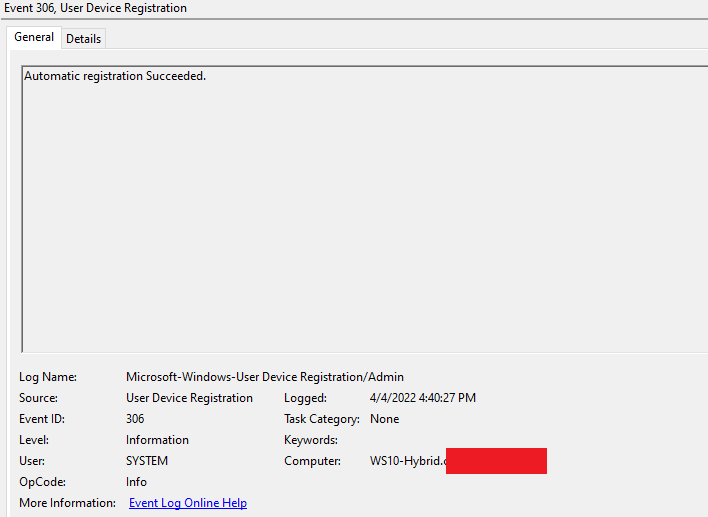
In the device, we can confirm the successful join through the Event viewer log named User Device Registration/Admin with event ID 306 showing the message: The complete join response operation was successful.
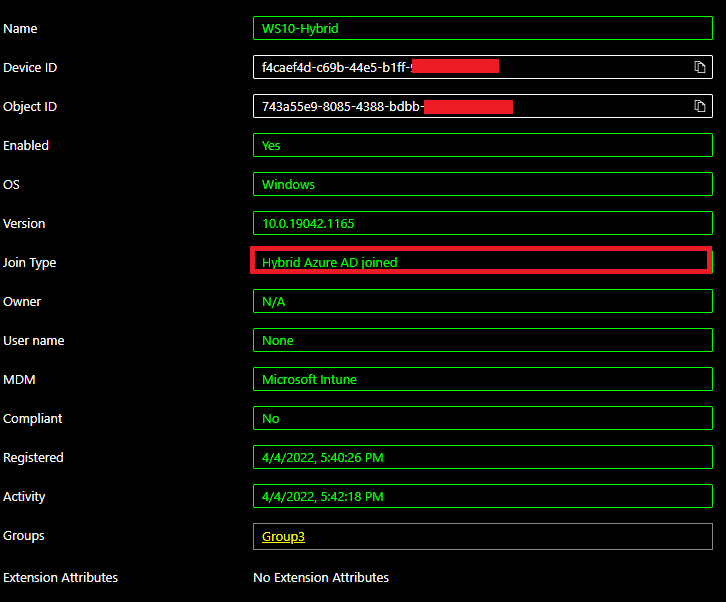
Now, checking the device status in Azure AD, we confirm it has changed from Pending to the date we completed the Hybrid Azure AD join process.
Summary

In this article, we covered how to troubleshoot error message error_missing_device when you try to configure your domain-joined device to Hybrid Join with Azure AD.

I hope you have enjoyed reading this article, and it helps you to manage your Device registration environment.

Enjoyed the article? Like and share. 🙂

Note: I do not represent the organization I work for, all the opinions expressed here, are my own. This post is provided AS IS with no warranties or guarantees and confers no rights.

In case you have any suggestions or feedback, please leave a comment.

[ ]’s

Ulysses Neves

Leave a Reply Cancel reply

Your email address will not be published. Required fields are marked *

Recent Posts

  • Microsoft Authenticator Will Block Jailbroken Devices in 2026 — What You Need to Know 17 de March de 2026
  • Enhancing Azure role activation security with FIDO2/Passkeys 23 de September de 2024
  • Microsoft Entra ID CAP | Enforcing WHfB using Authentication Strength 21 de April de 2024
  • Troubleshooting Error Code ‘0x000005e’ in WHfB: PIN Authentication Woes 11 de February de 2024
  • WHfB: Fixing Windows Hello for Business error ‘LogoncertTemplateReady: NO (StateNoTemplate)’ 29 de December de 2023

Archives

  • March 2026
  • September 2024
  • April 2024
  • February 2024
  • December 2023
  • September 2023
  • July 2023
  • June 2023
  • May 2023
  • April 2023
  • March 2023
  • February 2023
  • January 2023
  • December 2022
  • October 2022
  • September 2022
  • August 2022
  • July 2022
  • June 2022
  • May 2022
  • April 2022
  • March 2022
  • February 2022
  • January 2022
  • December 2021
  • November 2021
  • October 2021
  • September 2021
  • August 2021
  • July 2021
  • June 2021
  • May 2021
  • April 2021
  • March 2021
  • February 2021
  • January 2021
  • December 2020
  • November 2020
  • October 2020
  • September 2020
  • August 2020
  • July 2020
  • June 2020
  • May 2020
  • April 2020
  • March 2020
  • February 2020
  • January 2020
  • December 2019
  • November 2019
  • October 2019
  • September 2019
  • August 2019
  • July 2019

Tags

#aaddownleveldevice #aadhybridjoin #adfs #adfsonsql #azuread #azureauth #azureCA #azuredevice #azurehybridjoin #azuremfa #azuresecurity #capolicy #cloudkerberostrust #conditionalaccess #conditionalaccesspolicy #deviceregistration #gmsaaccount #gopasswordless #hybridaadjoin #mfaserver #msadfs #msazure #msidentity #namedlocation #sslcertificatevalidation #tshootadfs #tshoothybridjoin #tshootwaptrust #waptrust #WHFBcerttrust #whfbdeployment #WHfBhybridsetup #widdatabase adconnect authenticationcontext authenticationstrength az500 azuread azuremfa azurepim azuresecurity cloudsecurity microsoft365 msazure WHfB
©2026 Ulysses Neves | Design: Newspaperly WordPress Theme
Ulysses Neves
Gerenciar Consentimento de Cookies
Para fornecer as melhores experiências, usamos tecnologias como cookies para armazenar e/ou acessar informações do dispositivo. O consentimento para essas tecnologias nos permitirá processar dados como comportamento de navegação ou IDs exclusivos neste site. Não consentir ou retirar o consentimento pode afetar negativamente certos recursos e funções.
Funcional Always active
O armazenamento ou acesso técnico é estritamente necessário para a finalidade legítima de permitir a utilização de um serviço específico explicitamente solicitado pelo assinante ou utilizador, ou com a finalidade exclusiva de efetuar a transmissão de uma comunicação através de uma rede de comunicações eletrónicas.
Preferências
O armazenamento ou acesso técnico é necessário para o propósito legítimo de armazenar preferências que não são solicitadas pelo assinante ou usuário.
Estatísticas
O armazenamento ou acesso técnico que é usado exclusivamente para fins estatísticos. O armazenamento técnico ou acesso que é usado exclusivamente para fins estatísticos anônimos. Sem uma intimação, conformidade voluntária por parte de seu provedor de serviços de Internet ou registros adicionais de terceiros, as informações armazenadas ou recuperadas apenas para esse fim geralmente não podem ser usadas para identificá-lo.
Marketing
O armazenamento ou acesso técnico é necessário para criar perfis de usuário para enviar publicidade ou para rastrear o usuário em um site ou em vários sites para fins de marketing semelhantes.
  • Manage options
  • Manage services
  • Manage {vendor_count} vendors
  • Read more about these purposes
Ver preferências
  • {title}
  • {title}
  • {title}