Skip to content

Ulysses Neves

Microsoft Entra ID, authentication, and hybrid identity troubleshooting.

Menu
  • Home
  • Microsoft Azure
  • Microsoft AD FS
  • Microsoft 365
  • Contact
  • Troubleshooting Index
Menu

Microsoft Entra Privileged Identity Management (PIM) – Configuring Access Review

Posted on October 7, 2019

Hello, everyone. In today’s article, we’ll talk about another topic from the AZ-500 – Microsoft Azure Security Technologies exam, “Configuring access reviews” and explain what it is and how to perform an access review for security groups in Microsoft Entra ID using PIM. 

What is a Microsoft Entra Privileged Identity Management (PIM) access review?

Access reviews ensure periodic and timely validation of user membership in privileged groups that grant access to applications and resources in Azure.

Why review privileged access?

There are many benefits to using access reviews. Let’s list a few:

  • Ensure that active administrators in the company have appropriate access for their roles.
  • Verify that former administrators don’t retain access after leaving the company.
  • Proactively ensure that least privilege is applied in managing resources in Azure.

Reviewing access – step by step

Scenario

To illustrate how to create an access review, we’ll review the Azure AD Security Administrator group, approve the user Joseph, and deny access to the user Ulysses.

We’ll create the access review, review it, and confirm at the end of the review whether access was changed.

Creating the access review

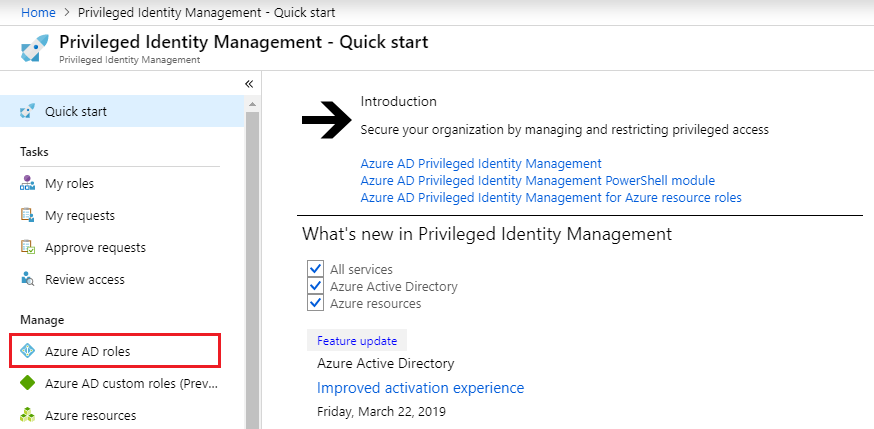
Access the PIM menu in Azure by clicking this link.
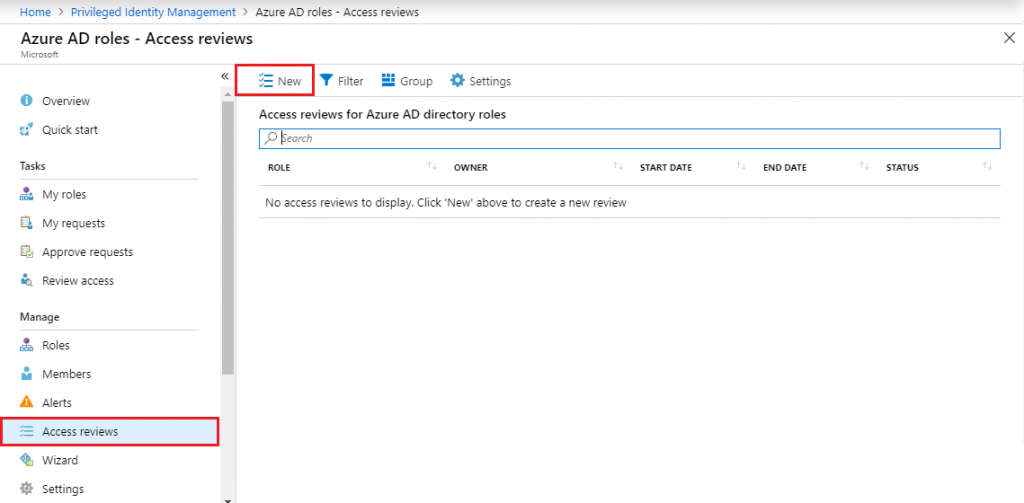
Select the Access reviews menu and then New.
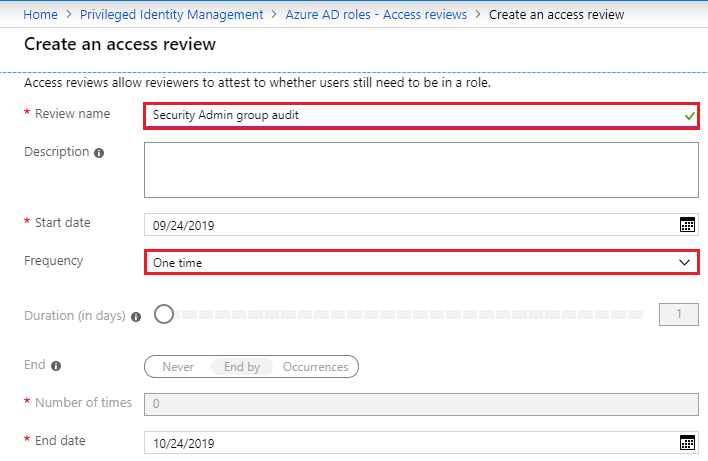
Let’s type the review name and select the frequency it should run.
We’ll select the Security Administrator role as the target of the access review.

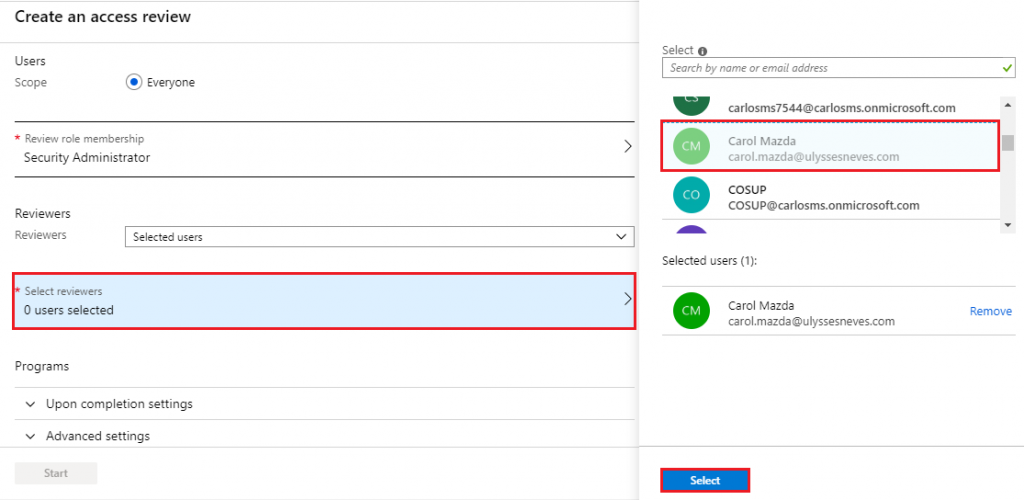
Now select one or more reviewers to evaluate the members of the chosen role by clicking Select reviewers and confirming with Select.
On the Auto apply results to resource option, check Enable. This option carries out the reviews made at the end of the access review window.
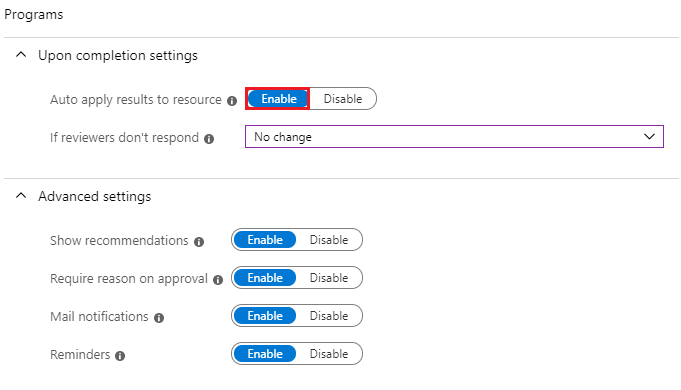
At the end of the review, click Start.

Reviewing access

With the review created, let’s sign in to the portal with the user carol.mazda, to whom we granted reviewer access at the beginning.

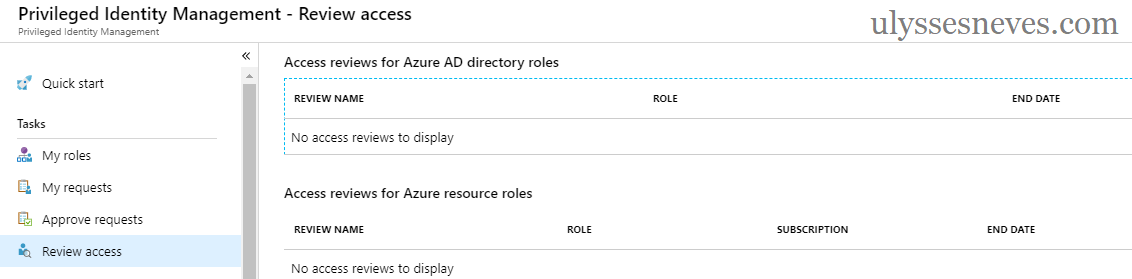
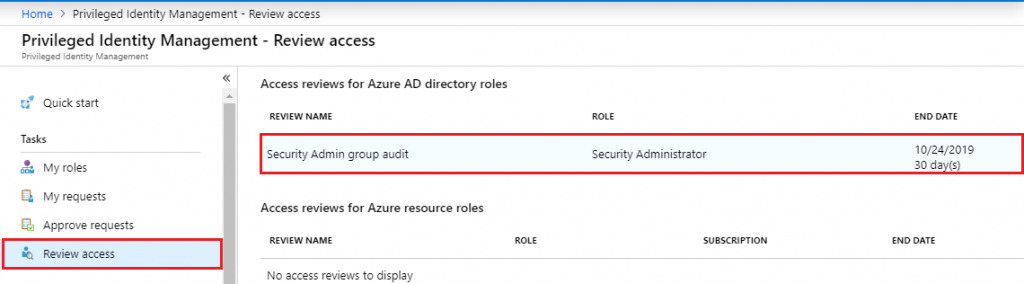
Access the PIM > Review Access menu and select the review that was created for the Security Administrator group.
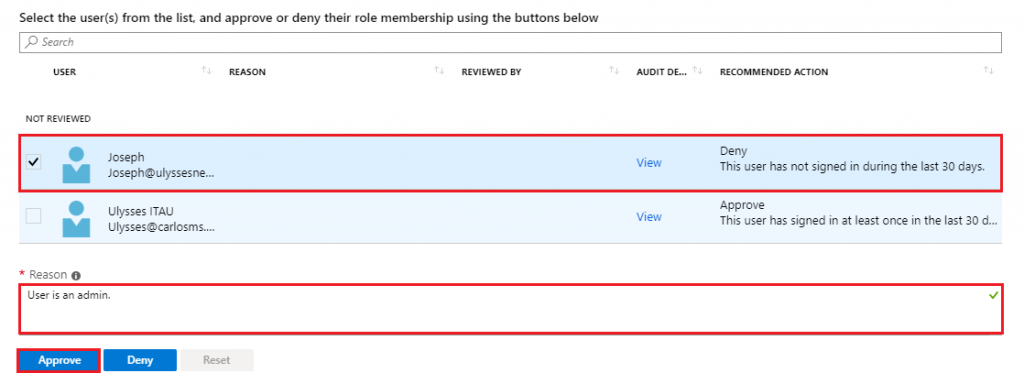
With both users in the group, we’ll approve the user Joseph’s continued membership and provide a justification.

Select the user and click Approve.
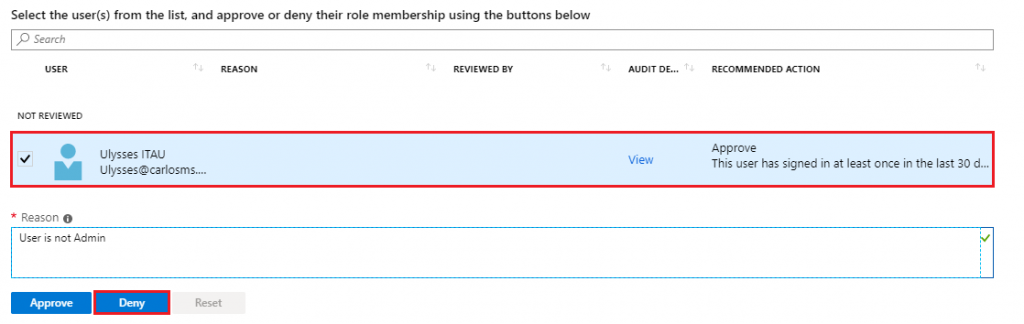
Now let’s select the user Ulysses and deny his continued membership in the Security Administrator group.

Select the user and click Deny.
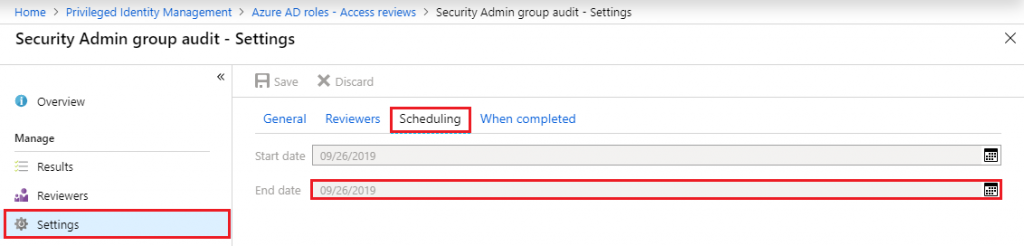
Note: For illustration purposes, I shortened the review window by accessing the review we created > Settings > Scheduling > End date.
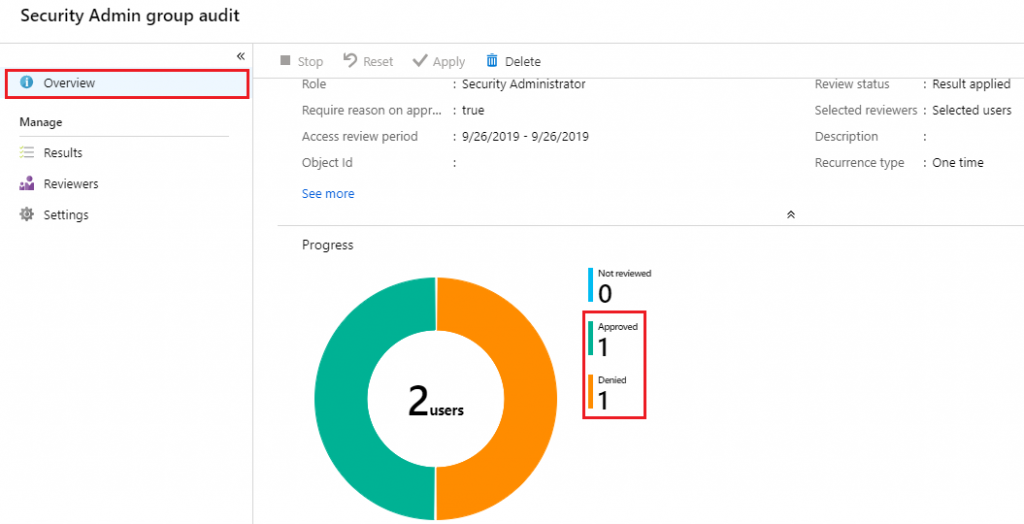
The Overview menu gives us the status of approvals and denials made by the reviewers.
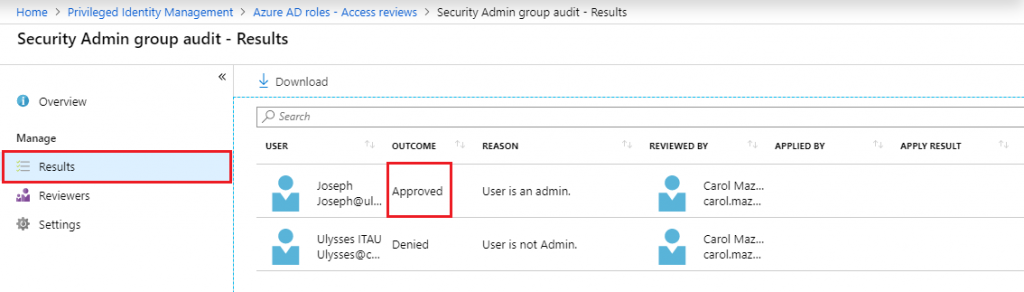
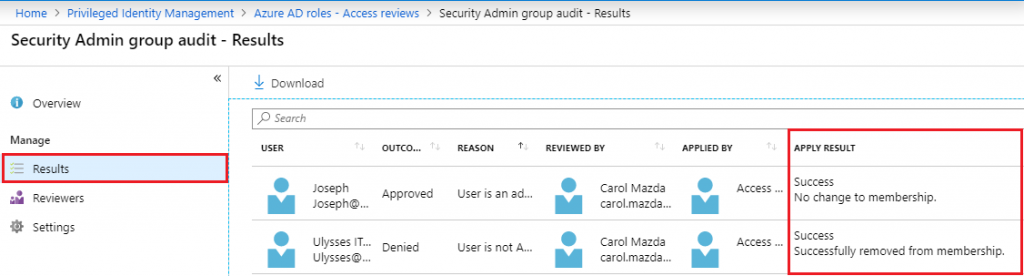
By clicking Results, you can view the results of the reviews performed in the Outcome column.
With the review finished, you can see the actions taken based on the reviewers’ decisions.
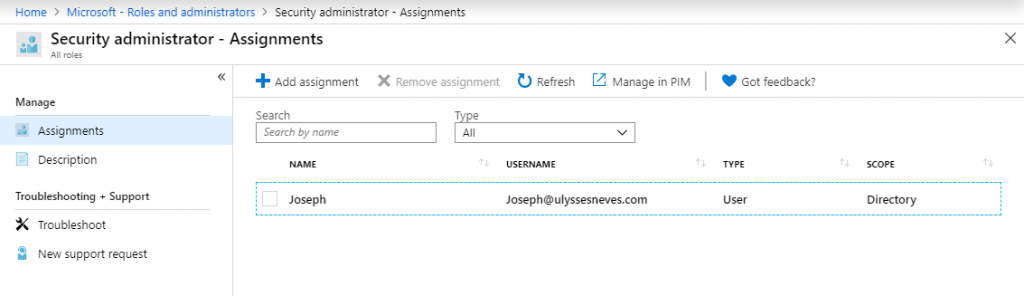
Accessing the Security Administrator group, we can see that the user Joseph remains in the group and the user Ulysses was removed.
Summary
In today’s article, we explained access reviews and created one to review a Microsoft Entra ID security group. We demonstrated how to approve and revoke access using PIM, and the effect of that assessment on the reviewed group.

In the next article, we’ll close out the topic “Configuring privileged access management” by talking about privileged access monitoring using alerts and events from Microsoft Entra Privileged Identity Management (PIM).

I hope this content has helped enrich your knowledge of Azure.

Did you like the post? Like and share it. 🙂

If you have any suggestions or comments, let us know.

[ ]’s

Ulysses Neves

Related guides: Browse the Microsoft Identity Troubleshooting Index or the Microsoft Entra ID topic archive.

Leave a Reply Cancel reply

Your email address will not be published. Required fields are marked *

Recent Posts

  • Microsoft Defender for Identity domain investigation: six questions to ask first September 10, 2026
  • Microsoft Entra Kerberos key rotation: what changes—and what administrators should check September 6, 2026
  • Microsoft Authenticator Will Block Jailbroken Devices in 2026 — What You Need to Know March 17, 2026
  • Enhancing Azure role activation security with FIDO2/Passkeys September 23, 2024
  • Microsoft Entra ID CAP | Enforcing WHfB using Authentication Strength April 21, 2024

Archives

  • September 2026
  • March 2026
  • September 2024
  • April 2024
  • February 2024
  • December 2023
  • September 2023
  • July 2023
  • June 2023
  • May 2023
  • April 2023
  • March 2023
  • February 2023
  • January 2023
  • December 2022
  • October 2022
  • September 2022
  • August 2022
  • July 2022
  • June 2022
  • May 2022
  • April 2022
  • March 2022
  • February 2022
  • January 2022
  • December 2021
  • November 2021
  • October 2021
  • September 2021
  • August 2021
  • July 2021
  • June 2021
  • May 2021
  • April 2021
  • March 2021
  • February 2021
  • January 2021
  • December 2020
  • November 2020
  • October 2020
  • September 2020
  • August 2020
  • July 2020
  • June 2020
  • May 2020
  • April 2020
  • March 2020
  • February 2020
  • January 2020
  • December 2019
  • November 2019
  • October 2019
  • September 2019
  • August 2019
  • July 2019

Tags

#aaddownleveldevice #adfs #adfscertificate #adfscertificates #adfsmfaadapter #azureauth #azureCA #azuredevice #capolicy #cloudsummit2021 #conditionalaccess #conditionalaccesspolicy #deviceregistration #farmbehavior #gopasswordless #mfaserver #msidentity #namedlocation #securingazure #securingazuread #sslprivatekey #troubleshootingadfs #troubleshootingwaptrust #tshootadfs #waptrust #webapplicationproxy #WHFBcerttrust #whfbdeployment #WHfBhybridsetup #WHfBprovisioning #widdatabase adconnect AD FS authenticationstrength az500 azurepim Azure security cloudsecurity microsoft365 Microsoft Azure Microsoft Entra hybrid join Microsoft Entra ID Microsoft Entra MFA PowerShell WHfB
©2026 Ulysses Neves | Design: Newspaperly WordPress Theme
Ulysses Neves
Gerenciar Consentimento de Cookies
Para fornecer as melhores experiências, usamos tecnologias como cookies para armazenar e/ou acessar informações do dispositivo. O consentimento para essas tecnologias nos permitirá processar dados como comportamento de navegação ou IDs exclusivos neste site. Não consentir ou retirar o consentimento pode afetar negativamente certos recursos e funções.
Funcional Always active
O armazenamento ou acesso técnico é estritamente necessário para a finalidade legítima de permitir a utilização de um serviço específico explicitamente solicitado pelo assinante ou utilizador, ou com a finalidade exclusiva de efetuar a transmissão de uma comunicação através de uma rede de comunicações eletrónicas.
Preferências
O armazenamento ou acesso técnico é necessário para o propósito legítimo de armazenar preferências que não são solicitadas pelo assinante ou usuário.
Estatísticas
O armazenamento ou acesso técnico que é usado exclusivamente para fins estatísticos. O armazenamento técnico ou acesso que é usado exclusivamente para fins estatísticos anônimos. Sem uma intimação, conformidade voluntária por parte de seu provedor de serviços de Internet ou registros adicionais de terceiros, as informações armazenadas ou recuperadas apenas para esse fim geralmente não podem ser usadas para identificá-lo.
Marketing
O armazenamento ou acesso técnico é necessário para criar perfis de usuário para enviar publicidade ou para rastrear o usuário em um site ou em vários sites para fins de marketing semelhantes.
  • Manage options
  • Manage services
  • Manage {vendor_count} vendors
  • Read more about these purposes
Ver preferências
  • {title}
  • {title}
  • {title}